

Non-Surgical Rhinoplasty & Pixie Nose in Nuneaton
Refining your profile. Enhancing facial balance. Without surgery.
Advanced, medically led nose filler treatments at Triana Aesthetics, with individual assessment, anatomical precision and a focus on natural-looking results.
From £275

Why your practitioner’s experience matters

The nose is one of the most anatomically complex and vascular areas of the face. Unlike many other dermal filler treatments, non-surgical rhinoplasty carries a risk of serious vascular complications, including skin necrosis and, in rare cases, permanent visual impairment.
This is why practitioner training, advanced anatomical knowledge and clinical judgement matter.
At Triana Aesthetics, your assessment and treatment are led by a clinician with:
● MSc Advanced Clinical Practice – postgraduate education in advanced clinical assessment, clinical reasoning and evidence-based decision-making.
● Postgraduate Level 7 Diploma in Clinical Aesthetic Injectable Therapies – advanced postgraduate training in aesthetic injectable treatments.
● Independent Nurse Prescriber (V300) – additional prescribing qualification and knowledge of medicines management.
● Over 12 years of Emergency Medicine experience – extensive experience in clinical assessment, recognising deterioration and responding to acute complications.
These qualifications and clinical experience underpin an approach that prioritises patient selection, anatomical assessment, risk recognition and appropriate complication management.
We believe advanced aesthetic treatments should be performed with more than technical ability alone. They require an understanding of facial anatomy, the ability to recognise when a treatment is inappropriate and the clinical judgement to put patient safety before aesthetic outcomes.
At Triana Aesthetics, suitability always comes before treatment.
Understanding your treatment
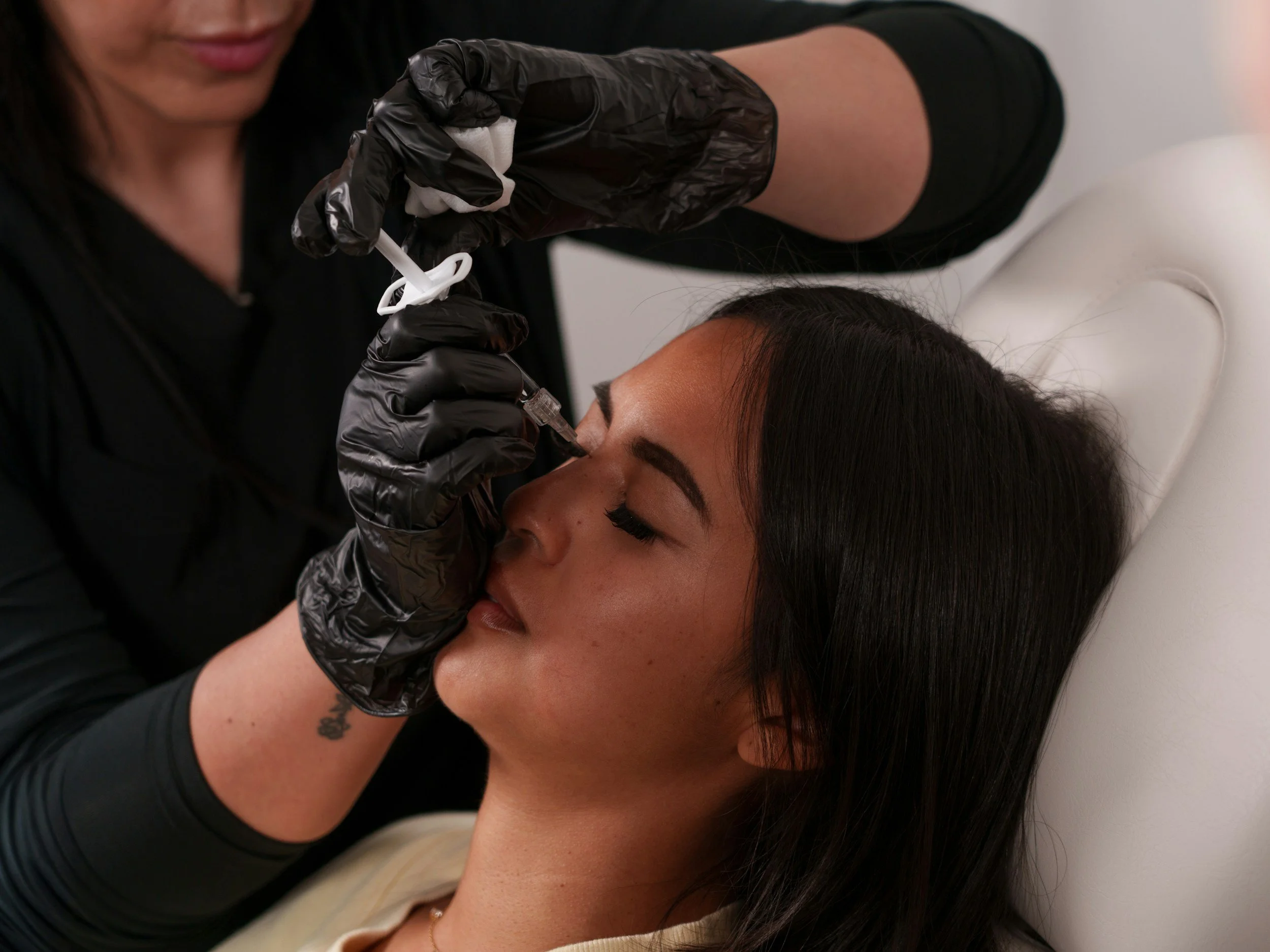
Non-surgical rhinoplasty, also known as liquid rhinoplasty or nose filler, uses carefully placed hyaluronic acid dermal filler to create subtle changes to the appearance of the nose without surgery.
Rather than removing or reducing nasal structures, the treatment works by strategically adding small amounts of volume to selected areas. When appropriate for the individual’s anatomy, this can help create a smoother-looking nasal profile, improve the appearance of certain asymmetries and create better visual balance.
What can non-surgical rhinoplasty address?

Depending on your anatomy and suitability, treatment may help to:
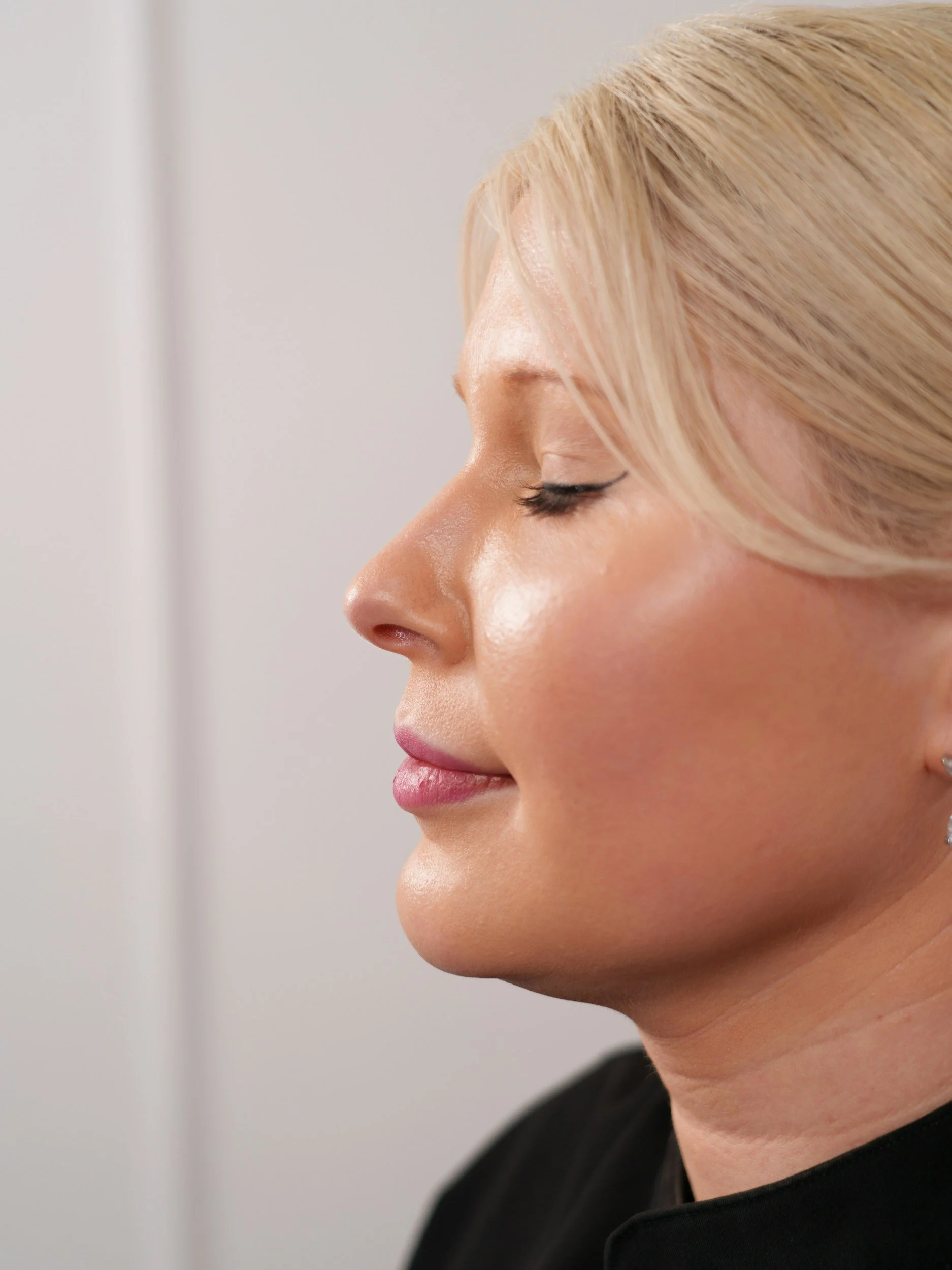
● Soften the appearance of a dorsal hump by creating a smoother nasal profile.
● Improve the appearance of minor nasal asymmetries.
● Refine the appearance of the nasal bridge.
● Improve the visual balance of the nose in relation to the rest of the face.
● Create subtle improvements to the nasal profile following previous assessment of surgical history.
Is non-surgical rhinoplasty suitable for everyone?
No. Adding filler increases volume, meaning it cannot physically reduce the size of the nose, remove a prominent hump or correct significant structural concerns.
Some nasal shapes and anatomical variations are unsuitable for filler treatment. In these circumstances, we may recommend that you seek an opinion from an appropriately qualified surgical specialist.
At Triana Aesthetics, we prioritise anatomical suitability and realistic outcomes over attempting to achieve a result that may compromise safety.
Risks & Potential Complications of Non-Surgical Rhinoplasty
Non-surgical rhinoplasty is an advanced injectable treatment that requires careful anatomical assessment and precise clinical judgement. Although it can produce subtle aesthetic improvements without surgery, it is important to understand that injecting dermal filler into the nose carries specific risks.
The nose has a complex network of blood vessels, including arteries that communicate with the blood supply to the eyes. An accidental injection into a blood vessel can have serious consequences.
At Triana Aesthetics, we believe informed consent means being transparent about both the expected side effects and the rare but potentially serious complications.
Common and temporary side effects
Following treatment, you may experience:
Swelling: Mild to moderate swelling around the treated area.
Bruising: Small areas of bruising around injection sites.
Tenderness: Temporary sensitivity or discomfort.
Redness: Localised redness around the injection points.
Asymmetry: Temporary or persistent unevenness while swelling settles.
Irregularities: Small lumps, unevenness or palpable areas beneath the skin.
These effects are generally temporary, although some irregularities may require further clinical assessment or treatment.
Less common complications
Other potential complications include:
Infection at the injection site.
Delayed inflammatory reactions.
Persistent swelling or hypersensitivity reactions.
Filler migration or displacement.
Visible or palpable filler irregularities.
A bluish discolouration beneath the skin, known as the Tyndall effect, associated with superficial filler placement.
Overcorrection or an aesthetically unsatisfactory result.
Some complications can develop days, weeks or even months after treatment.
Serious vascular complications
One of the most significant risks associated with non-surgical rhinoplasty is vascular occlusion.
This occurs when dermal filler enters or compresses a blood vessel, restricting the blood supply to surrounding tissues.
The consequences can include:
Skin ischaemia and tissue necrosis
If the blood supply to the nasal skin is compromised, the affected tissue may not receive sufficient oxygen. Early warning signs can include unusual or disproportionate pain, blanching (paleness), mottled or discoloured skin and changes in skin temperature.
Without prompt recognition and appropriate emergency management, this can progress to ulceration, tissue damage, permanent scarring and skin necrosis.
Visual impairment or blindness
The blood vessels supplying the nose have anatomical connections with the ophthalmic circulation, which supplies the eyes.
If filler enters the arterial circulation, it can travel towards the ophthalmic artery and obstruct blood flow to structures responsible for vision.
This can result in partial or complete visual loss, which may be permanent.
Stroke
In very rare circumstances, filler-related vascular complications can also affect the cerebral circulation, potentially resulting in a stroke and permanent neurological injury.
These complications are uncommon, but their potential consequences make non-surgical rhinoplasty a treatment that must never be approached casually.
Can complications be reversed?
Hyaluronic acid dermal fillers can be broken down using an enzyme called hyaluronidase. This is an important part of managing certain filler-related complications, including suspected vascular occlusion.
However, it is essential to understand that having access to hyaluronidase does not guarantee that a complication can be reversed.
In particular, filler-induced visual loss can be irreversible, and there is no guaranteed treatment to restore vision once damage has occurred.
Suspected vascular complications require immediate clinical assessment and emergency action. Any suspected visual disturbance or neurological symptoms require immediate transfer to an emergency department without delay.
Why this is important
The potential for serious complications is precisely why we place such importance on practitioner qualifications, advanced anatomical knowledge, appropriate patient selection and emergency preparedness.
At Triana Aesthetics, we believe patients should understand the risks before making a decision about treatment.
All potential complications, including the rare risk of visual loss and stroke, will be discussed as part of your informed consent process.
Your safety will always take priority over the aesthetic result.